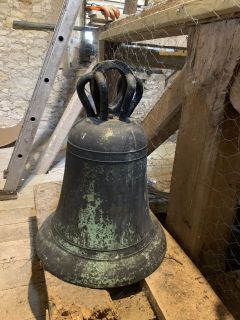
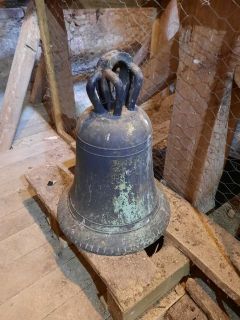
| | Location |
bell chamber |
|---|
| Diameter (in cm) |
50 |
|---|
| Approximate weight (in kilograms) |
72 |
|---|
| Casting year |
1100ca |
|---|
|
(2 cords) |
|---|
| Half foot (MP) |
(2 cords) |
|---|
| Assessment |
Debe ser incoado expediente para declararla Bien de Interés Cultural. En caso de rotura sólo puede ser soldada. Puede remplazarse por una réplica. |
|---|
| Installation |
La instalación es tradicional y debe ser conservada para proteger la sonoridad y otros valores culturales. Cualquier mecanización deberá conservar estas cualidades, reproducir los toques tradicionales y permitir los toques manuales. |
|---|
| Description (generated by Ollama - local AI) |
Here’s a summary suitable for an expediente concerning the bell at St Mary the Virgin Church, Heacham, designed for potential declaration as a Bien de Interés Cultural:
The Old Bell, dating from circa 1100, represents a significant example of early medieval English bell casting. Inscribed upon its face are the words “Johannes Fustis Fecit” (Johannes Fustus Fabricavit – Johannes Fust made this) and “Anno Domini 1100,” firmly establishing its age and origin. A second, smaller inscription reads “S. Maria.” The bell’s survival through centuries reflects the church’s history and the evolving techniques of bell production within ENGLAND.
Conservation efforts have focused on stabilization, acknowledging the bell’s vulnerability. Due to its age and the potential for irreparable damage, any restoration must prioritize careful soldering. Should soldering prove insufficient, a precise replica, mirroring the original’s form and material composition, is the permissible replacement method. |
|---|
Authors of the documentation- MARTÍNEZ ROIG, Eliseu (20-06-2024)
| | Card editor |
MARTÍNEZ ROIG, Eliseu |
|---|
| Updating |
20-06-2024 |
|---|
| 4 Pictures |
|---|
|